English follows below.
目次
和裁だけどミシンと型紙を使う
着物や羽織、袴、襦袢を作りたいけど和裁は手縫いや印つけが大変ですよね。
当店ではミシンで縫うスピードをアップし、型紙で寸法の知識を不要にしています。
それをミシン和裁と名付けてみます。
そんなミシン和裁に必要な道具を、一覧にして説明しますね。
ミシン
まずは中心となるミシンの種類ですが、
- ジャノメ
- ブラザー
- シンガー
といった名の知れた主要メーカーの出しているミシンなら問題なく縫えます。
価格としては日本なら1万円以上、海外なら1万5千円(2026年円ドル相場で言うと100ドルくらい)以上なら問題ないと思います。
その理由は
- 金属パーツが多い(プラスチックで代用していない)ため、故障率が低い
- 貫通する布の枚数が多い
ということです。
必要な機能としては
- 直線縫い
- ジグザグ縫い
だけです。
単衣(ひとえ、裏地なし)ではジグザグ縫いで端処理したりします。
袷(あわせ、裏地なし)では直線縫いだけ使います。
店主自身のミシン
ちなみに僕が使っているのは10年前に買ったbrotherのPS203です。
16,574円、送料込み・税込みで買いました。
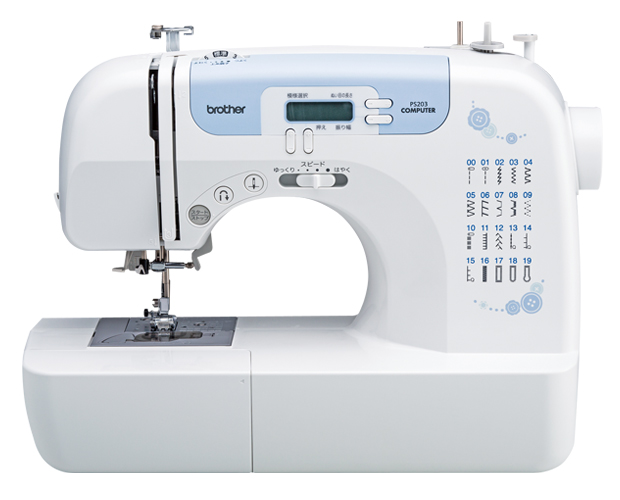
使い始めはデニム五枚重ねて縫ったりして壊して修理していましたが、だんだんどれくらいが無理なのかが分かってきました。
最近ではボビンケースが傷んできて糸がからむようになったので、自分でマイナスドライバーでフタを開けて交換し、直りました。
さらに前には、糸通しパーツも壊れたので、これもパーツを買って交換しましたよ。
使うモードは直線縫い(00)とギザギザ縫い(03)だけで、縫い目の長さは2.5mmと5mmを切り替えています。
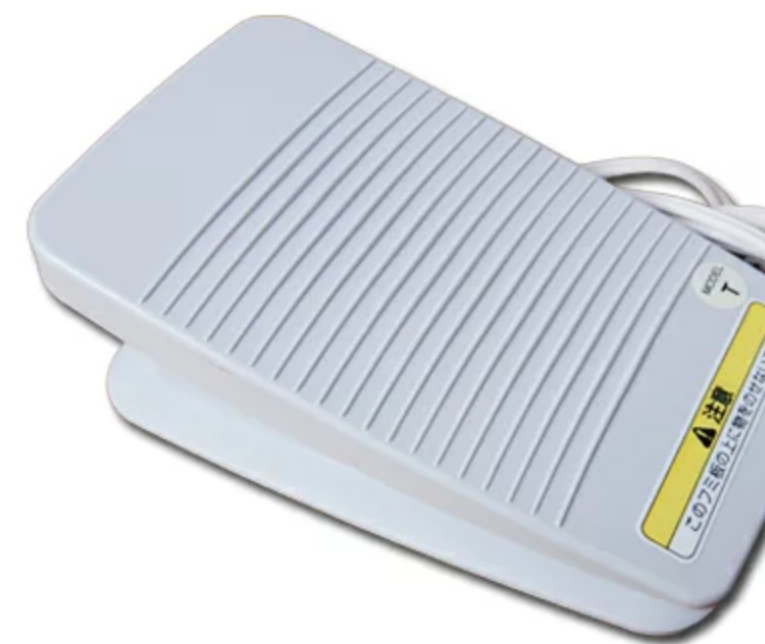
追加でフットコントローラーも買って、快適にやっております。
糸
ミシンに使う糸は、ネット通販で買います。
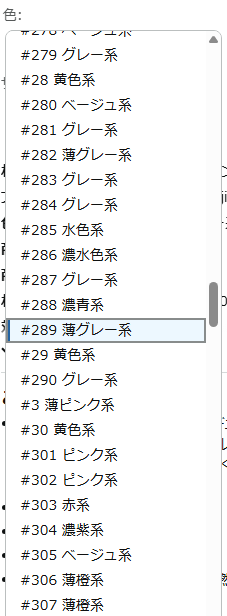
あらかじめGoogle検索で「フジックス FUJIX シャッペスパン」のキーワードで調べ、楽天などでこのようなカラー一覧画像が出てくるので、気に入った色の番号を覚えておきます。

そのまま楽天で買ってもいいですし、Amazonで買いたければ、Amazonのこのページで、選択肢から直接番号を指定して買います。
僕の以前買った糸はこちらです。
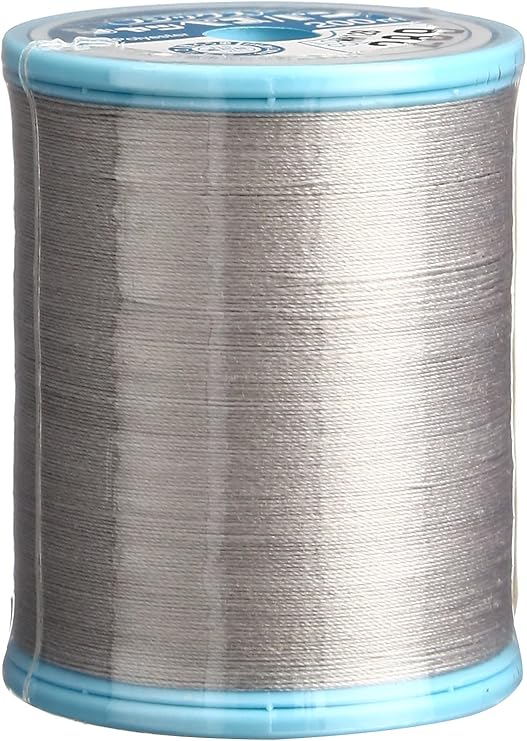
フジックス FUJIX シャッペスパン 普通地 用 ミシン糸 太さ 60番 200m巻
ポリエステル100%
自分用のほどほどのクオリティで大丈夫なら、縫う生地が
- 綿
- 麻
- ポリエステル
- 絹ウール
など、たいていの生地には、このフジックスのポリエステル100%をミシン糸として使って縫って大丈夫です。
しかし理想は綿の布には綿糸、絹の布には絹糸で合わせた方がクオリティは上がります。
百均は避ける
僕個人の体験ですが、百均の糸はガサガサしていてすべりが悪く、ミシンのボビンケースとの相性が悪くて糸がからんでしまうので避けています。
ミシン針
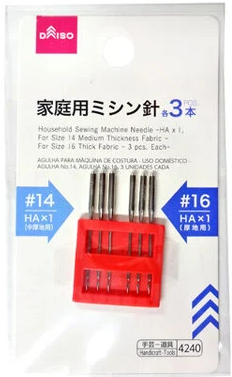
ミシン針は百均のを使っています。
よく、地厚の生地に細いミシン針のまま縫ってしまったりして折れるものですから、気軽に交換しています。
僕は近所のダイソーで買っていますが、
- 細い針
- 中くらいの針
- 太い針
の三種がそろっているので、地厚~薄手の生地に合わせて針を替えて使いましょう^-^
アイロン
水通しをした後の生乾きの生地の経糸・横糸をそろえたり、型紙ごと布地に折り目をつけたりするために使います。
スチーム機能があると折り目のクセが強くなったり、シワが取れたりするので必要です。
家庭用の普通のアイロンで大丈夫です。
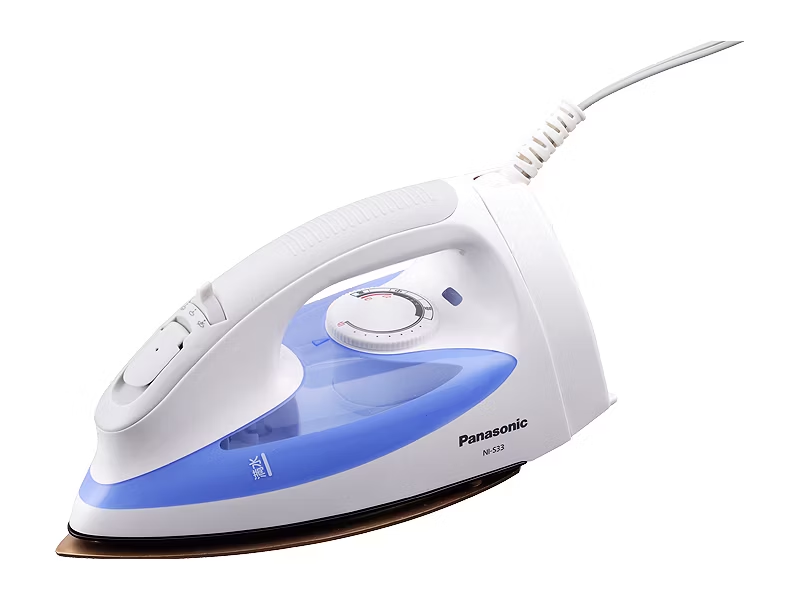
例えば僕が買ったのは、「Panasonic コード付スチームアイロン NI-S33」で、15年前に買って、まだ使っています。
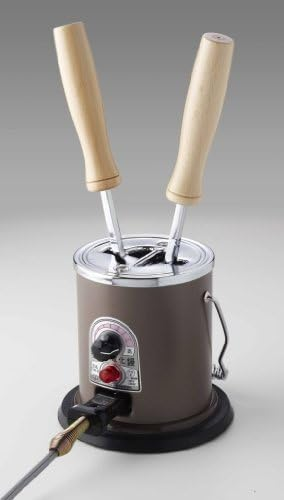
伝統的に和裁ではコテを使いますが、型紙があればコテは不要です。
アイロンマット
和服は大きすぎて、アイロン台では収まりきれません。
床や大きなテーブルの上で作業します。
僕の通っている和裁教室では、アイロン台というものはなく、長い机の上に何枚も綿の布を重ねて敷くことで、アイロンをどこでもかけられるようになっています。
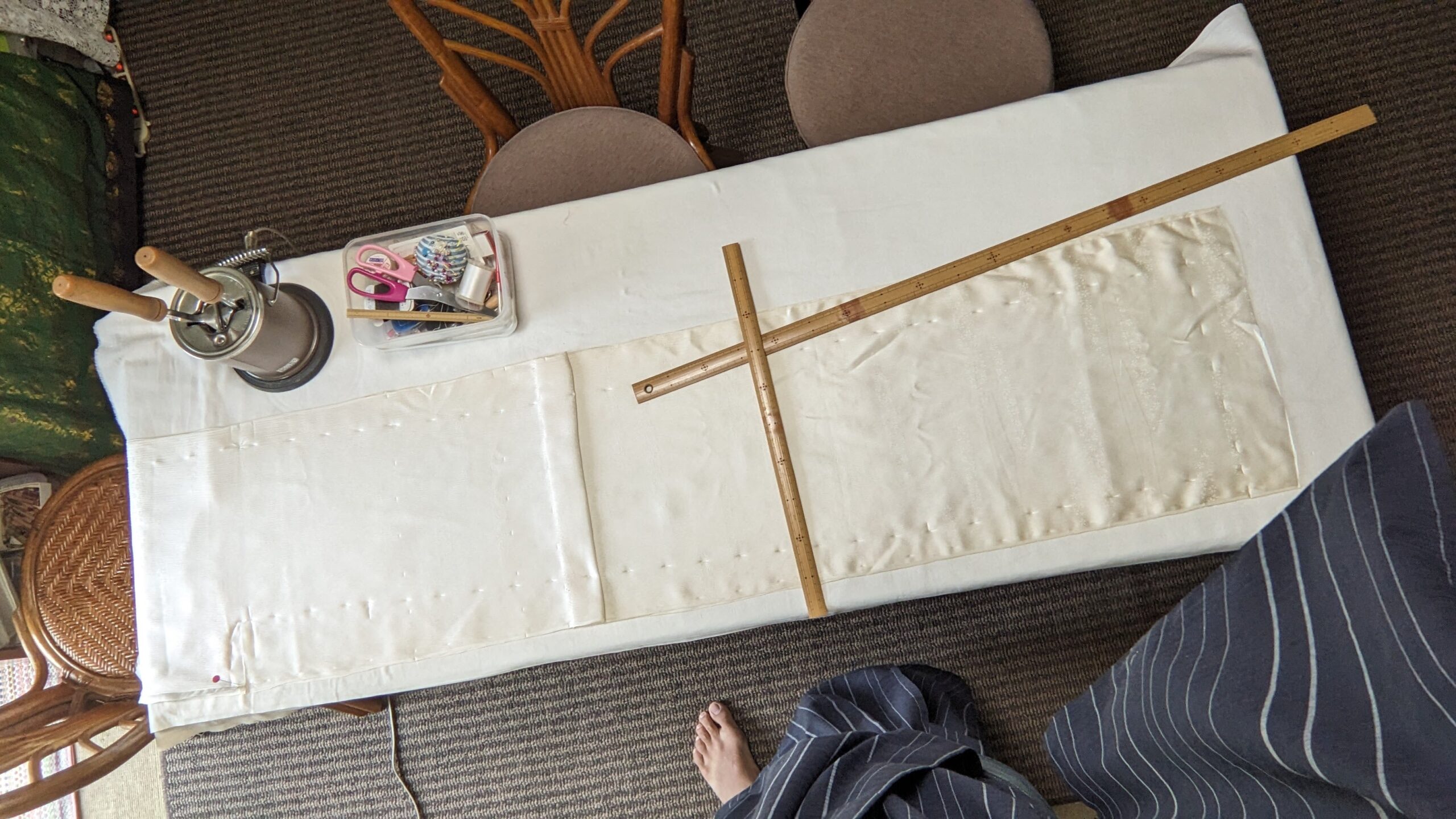
僕のうちでは、机は使わずに畳の上で作業していますので、
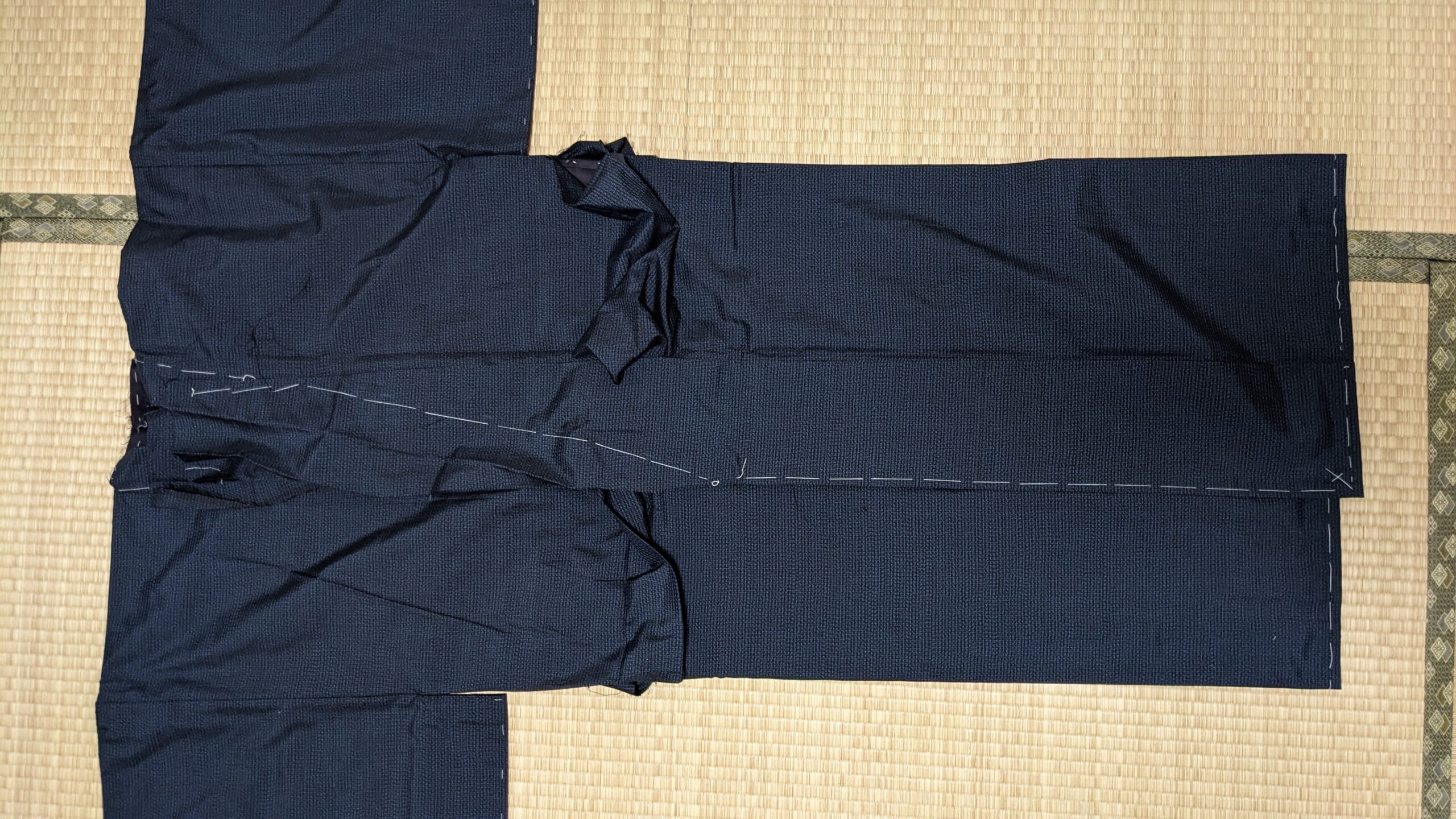
アイロンを使う際には畳の上にアイロンマットを敷くことになるわけです。
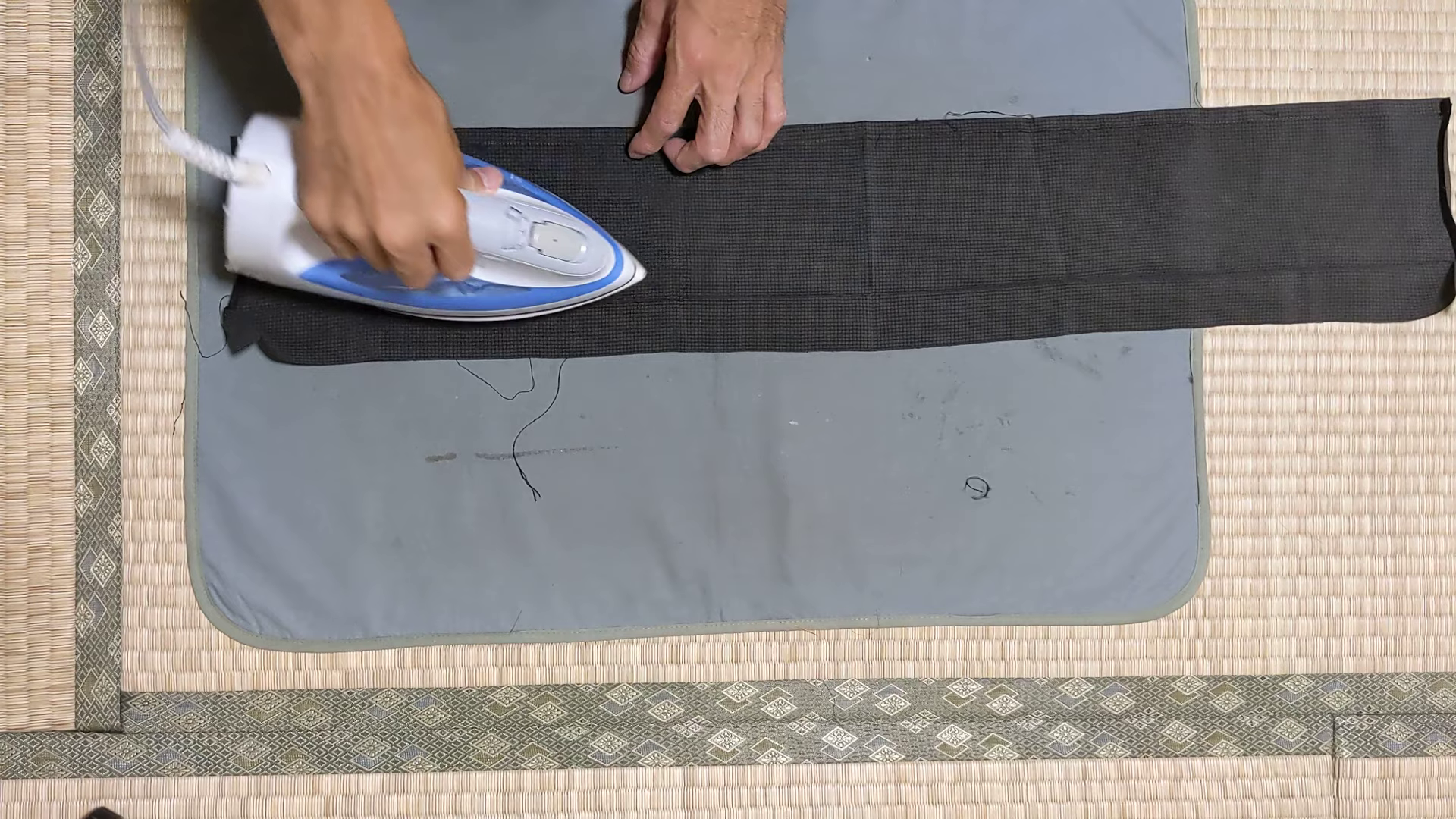
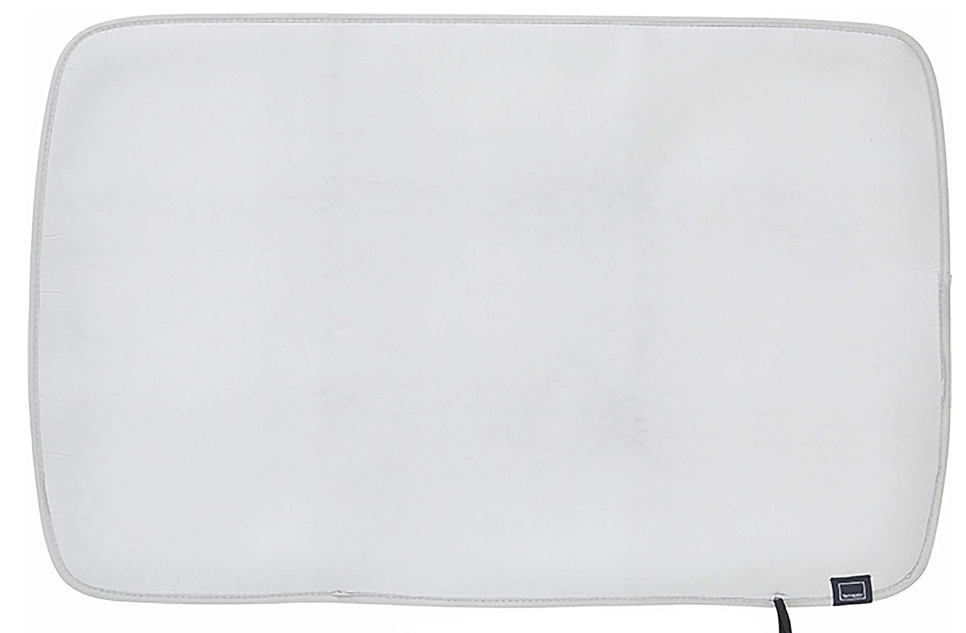
そのようなわけで、「山崎実業(Yamazaki) 折り畳み アイロンマット アルミ 約W72×D48cm」といった道具がおすすめです。
ハサミ
布地の裁断用のハサミこそ百均がいいです。
紙を切るハサミと違って裁縫用は、布でないものを間違って切ったりするとすぐダメになります。
布地だけを真面目に切っていてもいつかはダメになります。
百均のものでもクオリティは十分です。
なので気軽に交換できる、百均がオススメです^^
マチ針
和裁のマチ針の頭(付け根)は平べったいです。こんな形です。
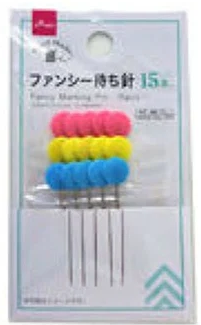
こういう丸ではありません。
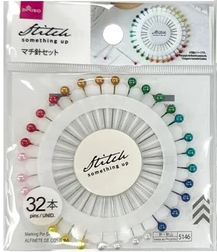
ちょっとでも針が曲がればすぐに捨てますから、百均で気軽に買えばOKです。
リッパー
縫い間違えて、元に戻す時などに使います。
こちらも百均で十分です。
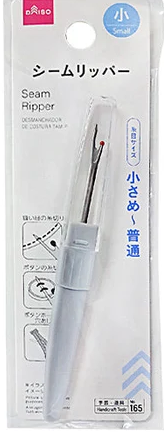
既存の着物のお直しなどでも、ほどく時に使います。
目打ち
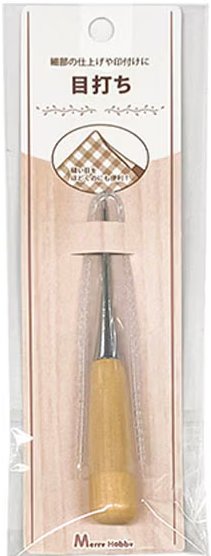
縫い糸をほどく時は、リッパーだと万が一にも布地を傷つけてしまうことがあるので、極力目打ちでほどきましょう。
目打ちでほどけない時にだけリッパーを使いましょう。
目打ちは百均で見かけることは少ないですが、見かけたら買えば良いですし、なければAmazonなどの通販で買いましょう。
クリップ
型紙と布地の端を固定する際に便利です。
型紙にマチ針でも固定できますが、都度紙に穴を開けるので紙が痛みますし、布地が少し歪み、若干のズレが生じます。
布端であればクリップを使いましょう。
布の真ん中でクリップが使えなければマチ針で型紙をとめましょう。
そのクリップですが、百均はオススメしません。
百均のはこんな形をしています。
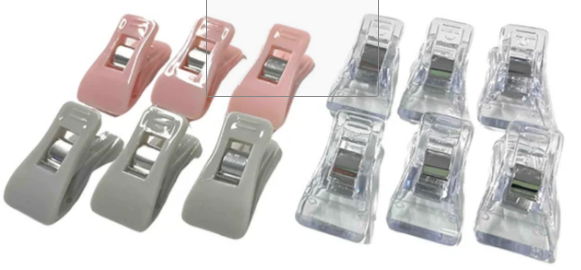
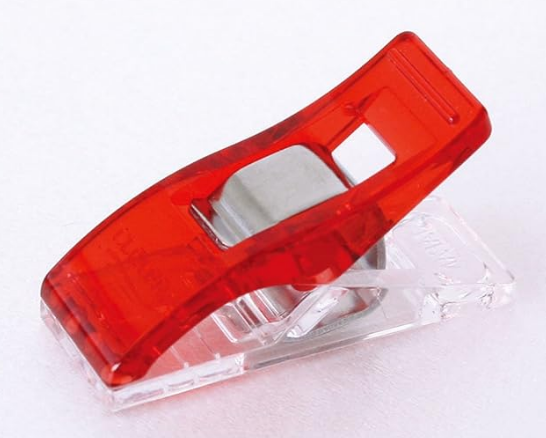
上下対称です。これでは床や机に置いた布地が浮いてしまい、正確な寸法となりません。
この目的ではCloverの仮止めクリップ一択です。
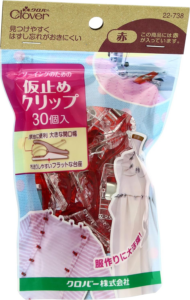
しかも着物や羽織、袴などの大きなものを作る和裁ではクリップを大量に使います。これは30個入りですが、この1袋を二つ買ってもいいくらいです。
Cloverのクリップは下が平坦です。これにより、布地が浮かず、正確な寸法をキープできます。
チャコペン
アイロンで印を付けるには小さすぎる箇所などに使います。
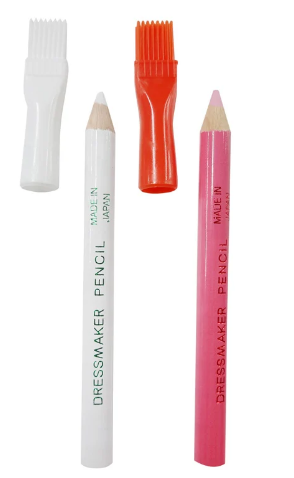
しかし和裁では、裁断する箇所にならチャコペンは使って良いですが、布端ではない内側のエリアにチャコペンを使うと色が落ちなくなるので使いません。代わりにコテで印をつけます。
僕としては、別に布の裏面だしほんの少しなら全く誰も見ないのだからチャコ便利だし、使ってもいいよね、と思っています^^
あとツルツルしている生地にチャコは使えません。その場合はアイロンや「きりび」で印をつけます。
きりび:ピンクなどの目立つ色の糸で印を付けたい場所に縫います。本縫いを終えたらきりびは取りはずします。
以上です
伝統的な和裁も習いたいですが、習うのも実際縫うのも時間がかかるので、先にミシンで和裁の世界に慣れ親しんで、だんだん全体像がつかめてきたらコテや手縫いなど、細かなテクニックを少しずつ取り込んでいけばいいと思いますよ。
手縫いは癒されますから、まるで心落ち着く禅の世界にいるようですよ~(^-^
Using a Sewing Machine and Patterns for Wasai
You want to make a kimono, haori (a traditional jacket), hakama (pleated trousers), or juban (undershirt), but wasai (traditional Japanese dressmaking) involves a lot of tedious hand-sewing and marking, right?
At our shop, we speed up the sewing process by using a sewing machine and eliminate the need for sizing knowledge by using paper patterns.
I like to call this “machine wasai.”
Let me explain the tools you need for this machine wasai in a list.
Sewing Machine
First, regarding the types of sewing machines, which are the core of this process:
- Janome
- Brother
- Singer
You can sew without any problems if you use a machine from well-known major manufacturers like these.
As for the price, I think anything over 10,000 yen in Japan, or over 15,000 yen overseas (about 100 dollars at the 2026 yen-dollar exchange rate) should be fine.
The reasons are:
- They have many metal parts (not substituted with plastic), so the failure rate is low.
- They can pierce through more layers of fabric.
That’s about it.
The only necessary functions are:
- Straight stitch
- Zigzag stitch
That’s all.
For a hitoe (an unlined kimono), we use the zigzag stitch to finish the edges.
For an awase (lined kimono), we only use the straight stitch.
My Own Sewing Machine
By the way, the one I use is a Brother PS203 that I bought 10 years ago.
I bought it for 16,574 yen, including shipping and tax.
When I first started using it, I would break it by sewing through five layers of denim and then repair it, but I gradually learned its limits.
Recently, the bobbin case got damaged and the thread started tangling, so I opened the cover with a flathead screwdriver and replaced it myself, which fixed it.
Even before that, the needle threader part broke, so I bought a replacement part and swapped that out too.
The only modes I use are straight stitch (00) and zigzag stitch (03), and I switch between stitch lengths of 2.5mm and 5mm.
I also bought an additional foot controller, and I’m sewing very comfortably.
Thread
I buy the thread for my sewing machine online.
I search Google in advance using the keywords “Fujix Schappe Spun,” and since color list images like this come up on sites like Rakuten, I memorize the number of the color I like.
You can just buy it on Rakuten, or if you want to buy it on Amazon, you can go to this page on Amazon and buy it by directly selecting the number from the options.
Here is the thread I bought before.
Fujix Schappe Spun Sewing Machine Thread for Normal Fabrics, Thickness #60, 200m Roll
100% Polyester
If a moderate quality for your own personal use is fine, then for sewing fabrics like:
- Cotton
- Linen/Hemp
- Polyester
- Silk wool
…and most other fabrics, it’s perfectly fine to use this 100% polyester Fujix thread as your sewing machine thread.
However, ideally, matching cotton thread with cotton fabric and silk thread with silk fabric will increase the quality.
Avoid 100-Yen Shops
In my personal experience, thread from 100-yen shops is rough and doesn’t slide well, and it doesn’t play nicely with the sewing machine’s bobbin case, causing the thread to tangle, so I avoid it.
Sewing Machine Needles
I use sewing machine needles from the 100-yen shop.
I often end up sewing thick fabrics with a thin needle and breaking it, so I like being able to replace them casually.
I buy mine at my neighborhood Daiso, and since they have an assortment of three types:
- Thin needles
- Medium needles
- Thick needles
…let’s make sure to change the needle to match the thickness of the fabric, from thick to thin ^-^
Iron
It’s used to align the warp and weft threads of the half-dry fabric after mizutooshi (pre-washing), and to crease the fabric along with the paper pattern.
A steam function is necessary because it helps set stronger creases and removes wrinkles.
A regular household iron is perfectly fine.
For example, the one I bought is the “Panasonic Corded Steam Iron NI-S33”; I bought it 15 years ago and I’m still using it.
Traditionally, a kote (a small Japanese tailoring iron) is used in wasai, but if you have a paper pattern, a kote is unnecessary.
Ironing Mat
Japanese clothing is too large to fit on a standard ironing board.
We work on the floor or on a large table.
At the wasai class I attend, there are no ironing boards; instead, they layer several cotton cloths on top of a long desk so that you can iron anywhere on it.
At my house, I don’t use a desk and work on the tatami mats instead, so…
…when I use the iron, I have to lay an ironing mat down on the tatami.
For that reason, I recommend a tool like the “Yamazaki Folding Aluminum Ironing Mat, approx. W72 x D48cm.”
Scissors
For fabric cutting scissors, the 100-yen shop is actually the best.
Unlike scissors for cutting paper, sewing scissors will get ruined immediately if you accidentally cut something other than fabric.
Even if you strictly only cut fabric, they will eventually wear out.
The quality of 100-yen shop scissors is more than enough.
So I recommend 100-yen shop ones, since you can replace them without a second thought ^^
Sewing Pins
The heads of machibari (sewing pins) used in wasai are flat. They look like this.
They are not round like this.
If a pin bends even a little, I throw it away immediately, so it’s perfectly fine to just buy them casually at the 100-yen shop.
Seam Ripper
You use it when you make a sewing mistake and need to undo it.
A 100-yen shop one is plenty for this, too.
It’s also used for unpicking stitches when altering an existing kimono.
Awl
When unpicking threads, a seam ripper can occasionally damage the fabric, so you should try to use a meuchi (awl) to unpick them as much as possible.
Only use a seam ripper when you can’t unpick it with an awl.
You don’t often see awls at 100-yen shops, but if you spot one, you should buy it; if not, just buy one online on Amazon or similar sites.
Clips
These are handy for securing the edges of the paper pattern and the fabric.
You can also secure the pattern with sewing pins, but poking holes in the paper every time will damage it, and the fabric will distort slightly, causing a slight misalignment.
If it’s on the edge of the fabric, let’s use clips.
If you’re in the middle of the fabric and can’t use clips, secure the pattern with pins.
As for those clips, I don’t recommend the 100-yen shop ones.
The 100-yen shop ones look like this.
They are vertically symmetrical. With these, the fabric placed on the floor or desk will lift up, and you won’t get accurate measurements.
For this purpose, Clover’s Wonder Clips are the only choice.
Moreover, you use a massive amount of clips in wasai when making large items like kimono, haori, and hakama. This is a pack of 30, but you might even want to buy two of these bags.
Clover’s clips are flat on the bottom. Because of this, the fabric doesn’t lift, and you can maintain accurate measurements.
Chaco Pen
You use it for areas that are too small to mark with an iron.
However, in wasai, while it’s fine to use a chaco pen (tailor’s chalk pen) on areas that will be cut, we don’t use it on inner areas away from the fabric edges because the color won’t come out. Instead, we mark those with a kote.
Personally, I think since it’s on the back of the fabric and no one will see a tiny mark anyway, chaco pens are convenient and it’s totally fine to use them ^^
Also, you can’t use chaco on slippery fabrics. In that case, you mark them with an iron or “kiribi.”
Kiribi (thread marking): You sew a stitch in a conspicuous color like pink where you want to make a mark. Once the main sewing is done, you remove the kiribi.
That’s All!
I’d love to learn traditional wasai too, but both learning and actually sewing take a lot of time. So, I think it’s a good idea to first get familiar with the world of wasai using a sewing machine, and as you gradually grasp the big picture, you can slowly incorporate finer techniques like using a kote or hand-sewing.
Hand-sewing is very healing; it’s almost like being in a calming world of Zen~ ^-^