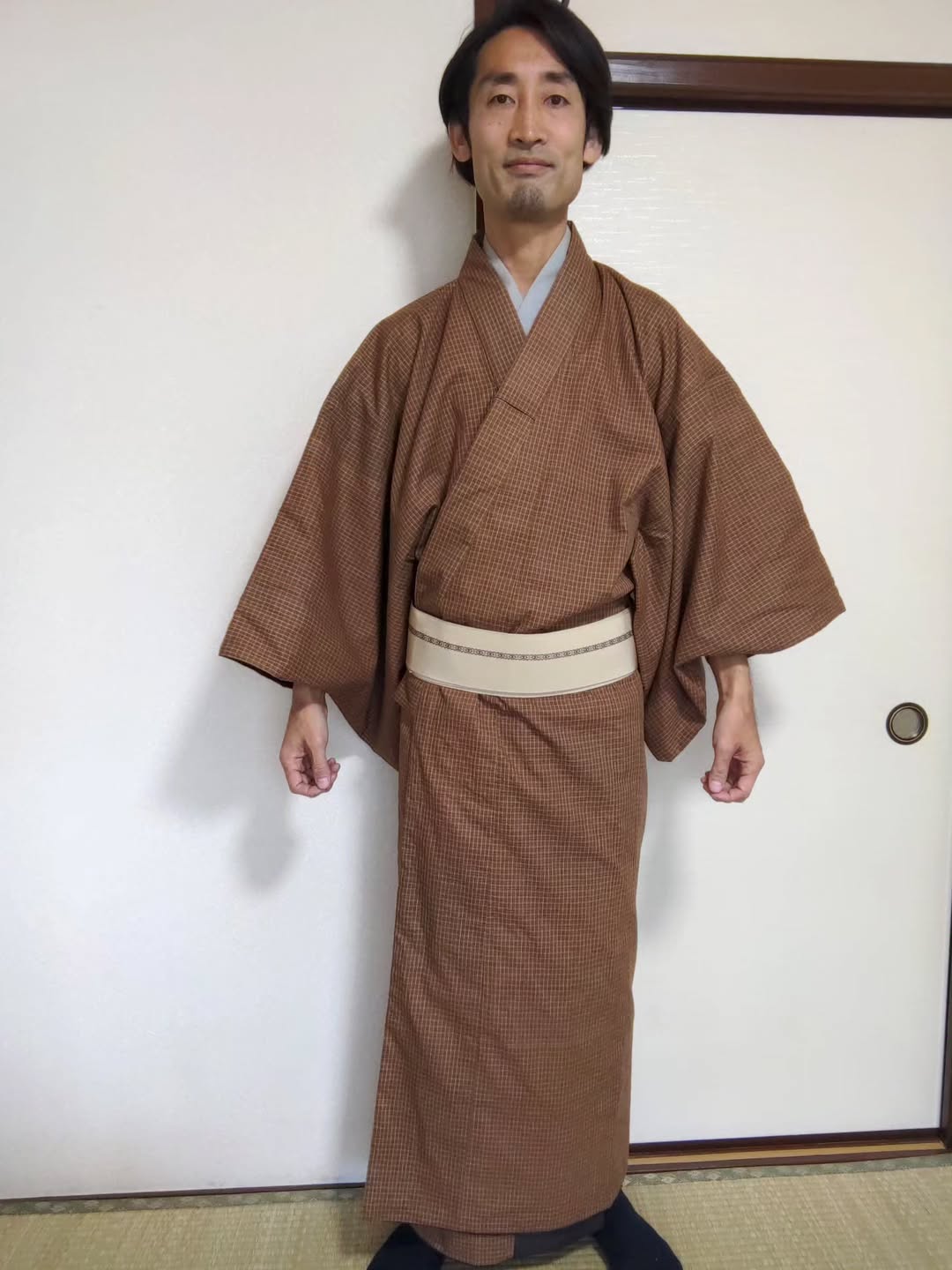
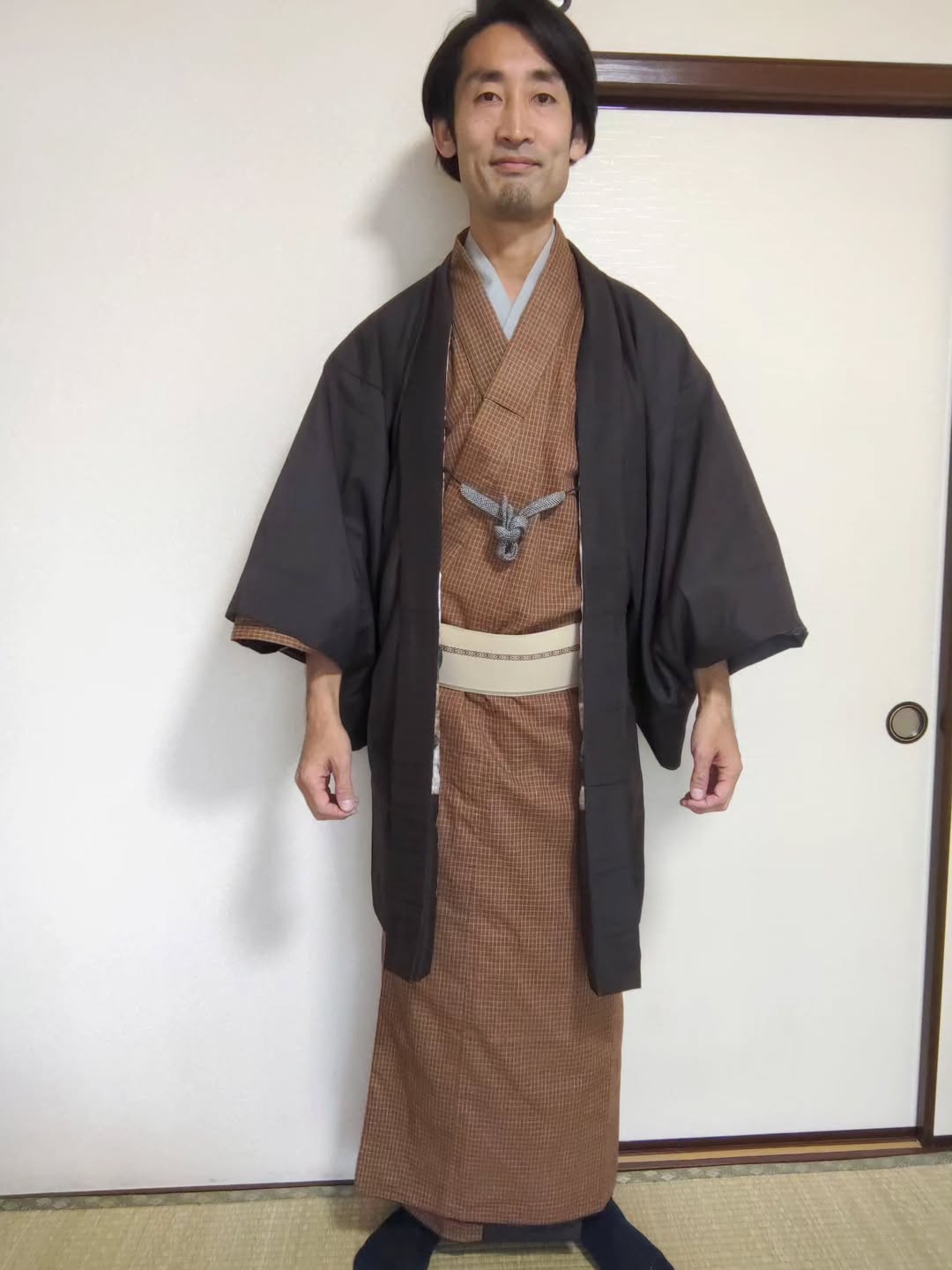
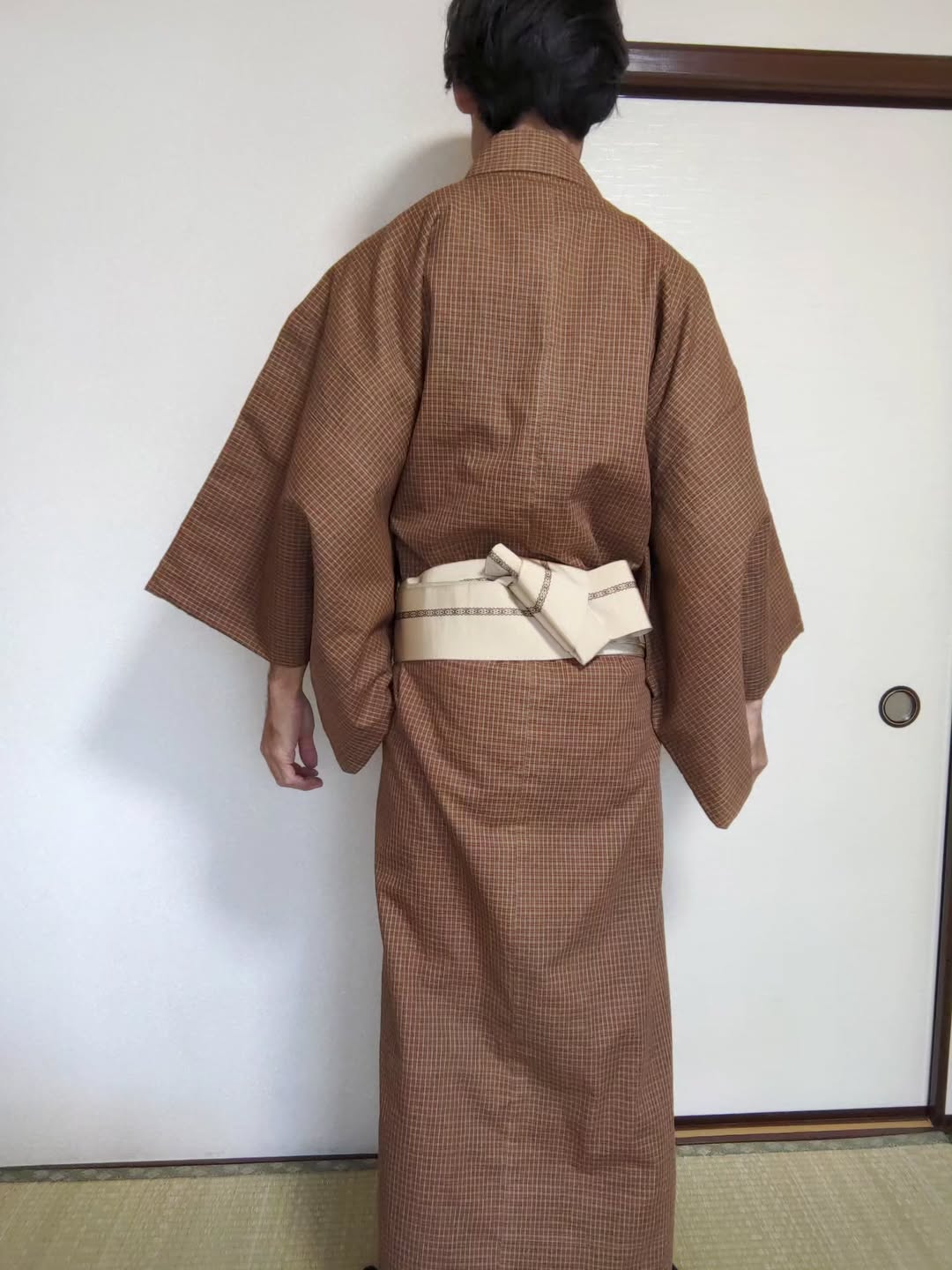
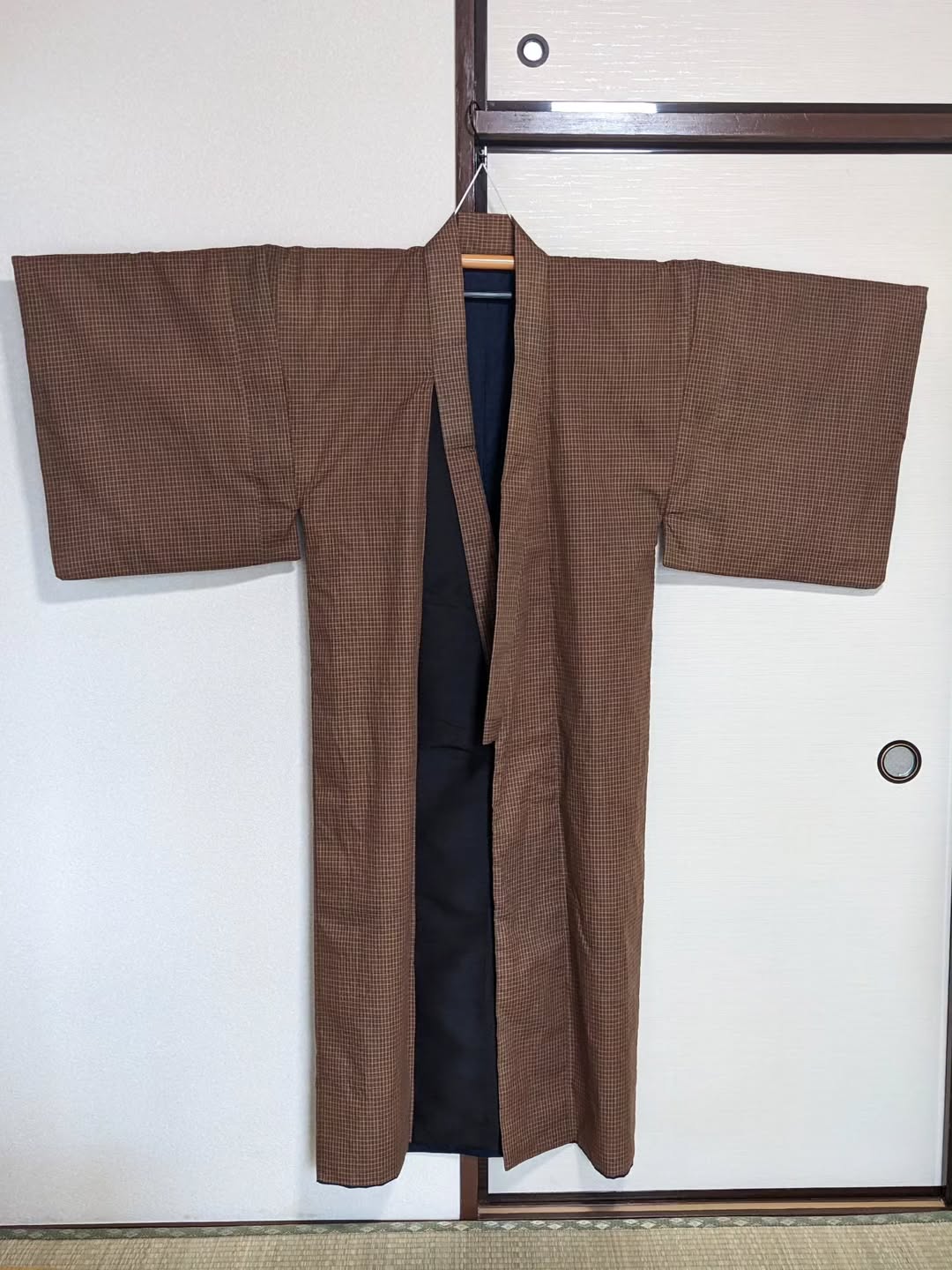
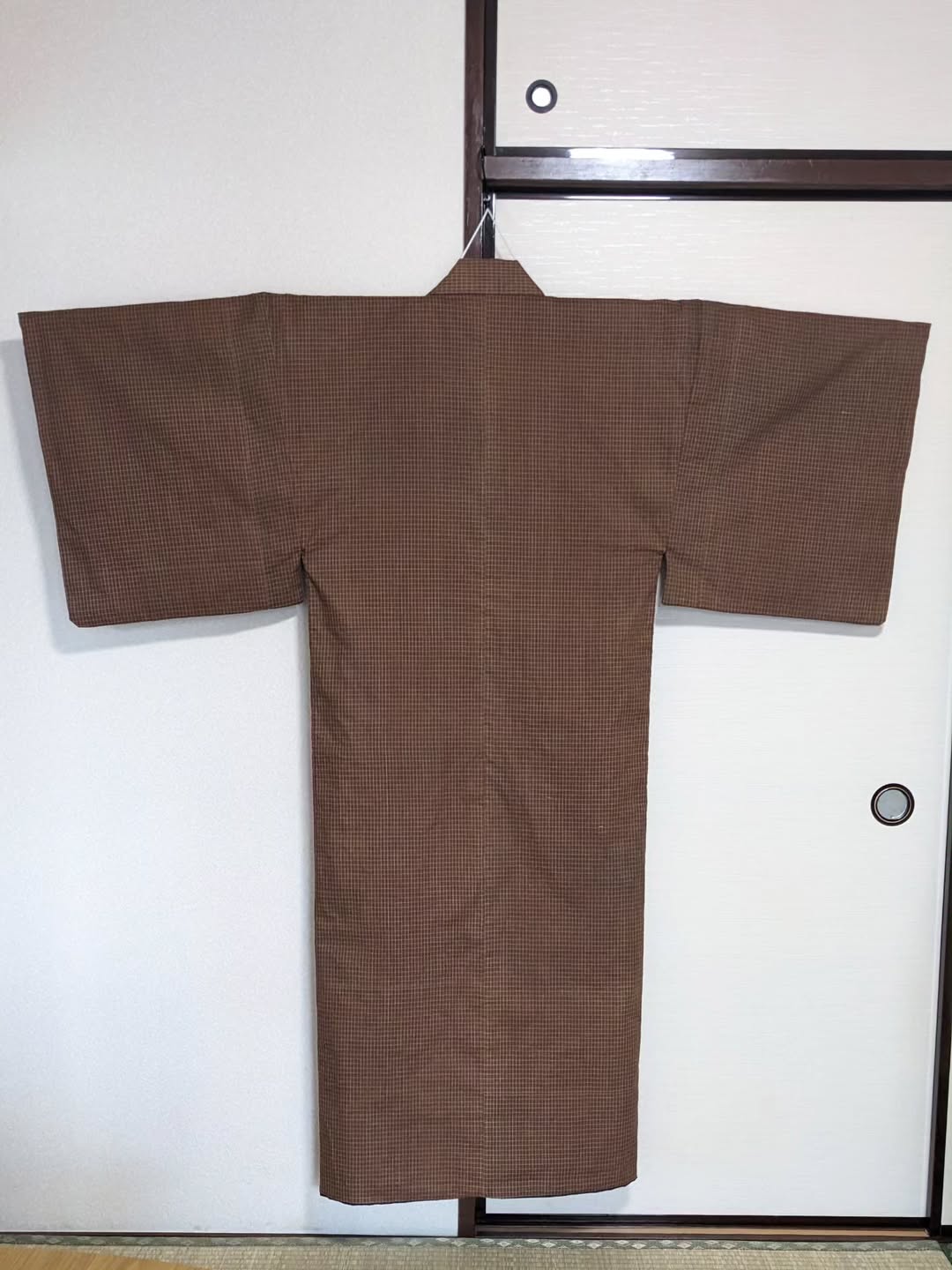
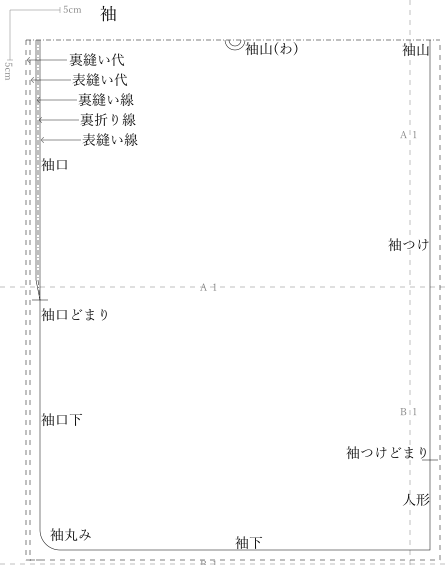
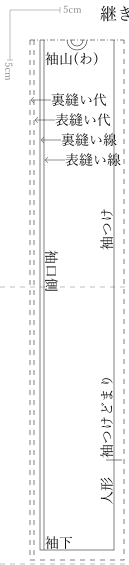
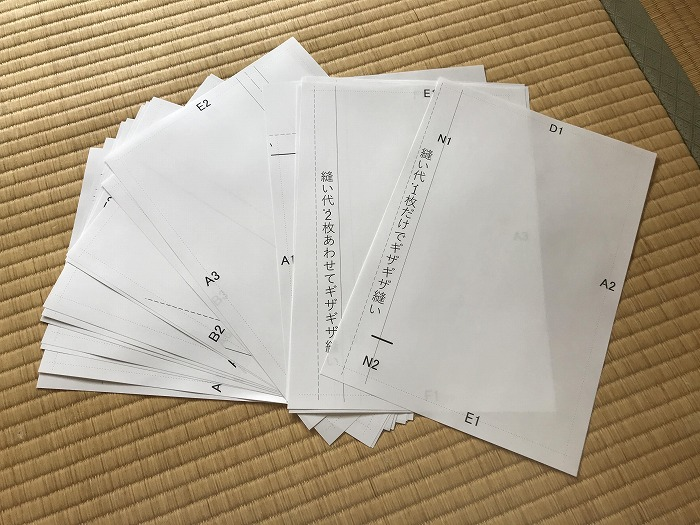
The product is a PDF, but this sample is an image.
Video tutorial
Check if you can make it with this pattern
Size chart
[If you are unsure about size]
Special or adjusted sizes not listed in the table, such as “3L” or “LL_wide”, are also available (or can be made). If you are unsure whether a size will fit your body, please feel free to contact us.
info@wkimono.tokyo
Required fabric length
This is the length for the outer fabric only. Lining fabric is required separately.
Layout of each part
Select gender and size to display the layout on 110cm-wide fabric.
① Print all PDF files. * "sode.pdf" is for sleeves; print 2 copies each for left and right sleeves. * Solid lines are finished lines, dashed lines are seam allowances, and dash-dot lines are fold lines.
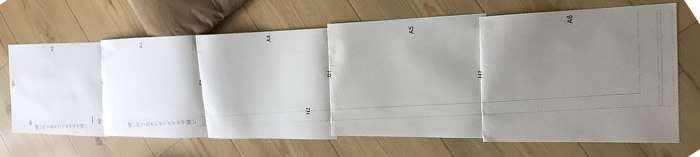
② Use tape to join matching symbols (e.g., "A1" to "A1").
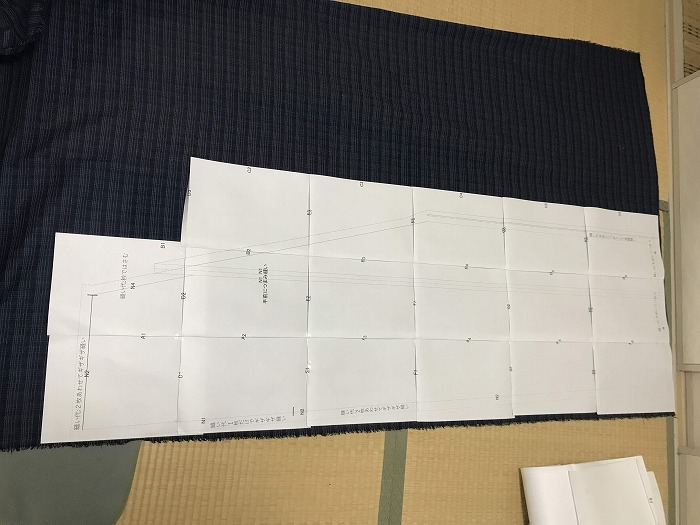
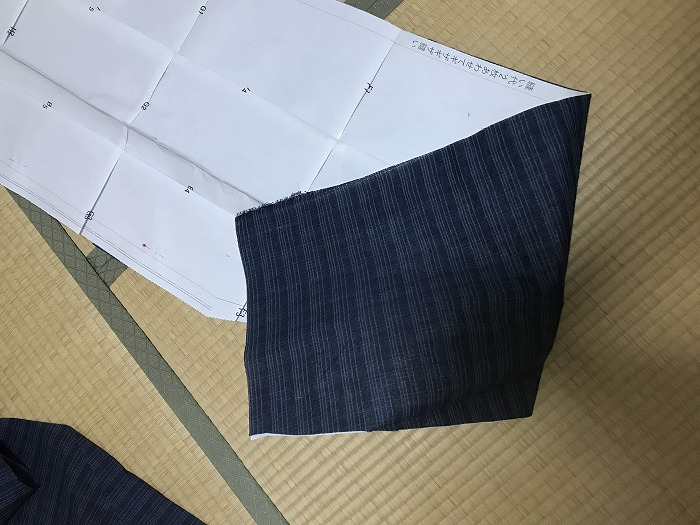
③ Fold along the dashed line on one side and pin to the fabric.
④ Cut the fabric along the dashed line with the pattern attached.
Printing tips
For correct sizing, please note the following when printing.
[Windows]
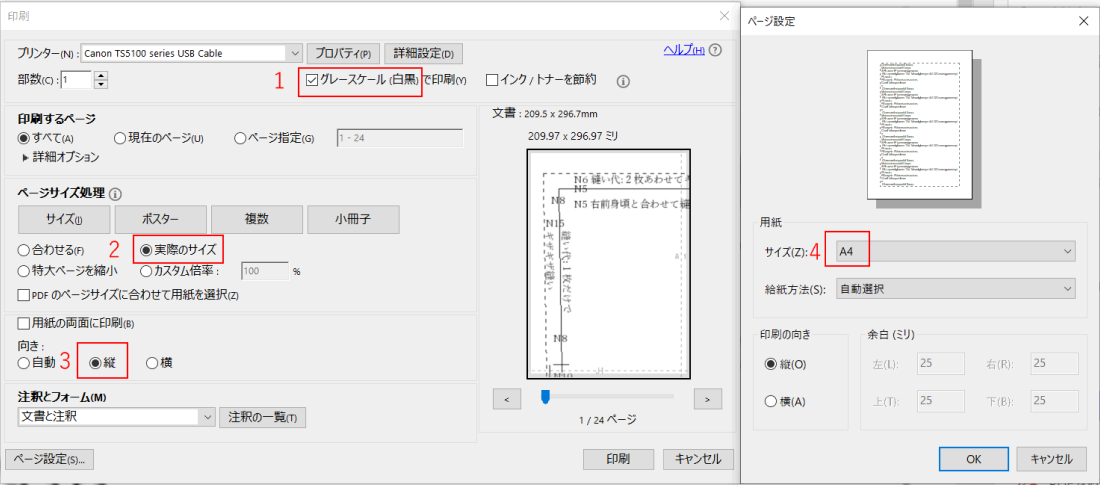
Print in black and white
Select "Actual size" to print at the correct size.
Select "Portrait" orientation
Select "A4" paper size
[Macintosh]
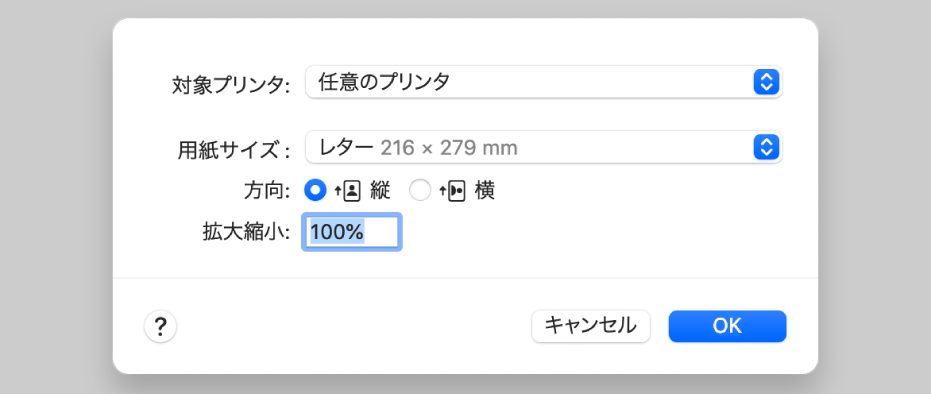
We do not have a Macintosh environment, so this is based on Apple's help and customer feedback. According to Apple's guide, 100{}cale gives the closest to actual size. Paper size is A4.

Feel free to contact us by email at info@wkimono.tokyo with any questions or requests, before or after purchase. We typically reply within 1-2 days.
Should I calculate the "back width" (ushirohaba) from my hip measurement? How does the body width of a kimono work, and how can I check which size fits me?
The "back width" (ushirohaba) does not refer to your hip circumference itself.
Around the waist, a kimono is made of panels that wrap around your body side by side, starting from the center back seam: "back width" (ushirohaba), "front width" (maehaba), "okumi width" and "collar width" (erihaba). Picture the edge of the collar width landing right around the edge of your hip on the right-front side.
To check your size, I recommend the following:
1. If you have a yukata or kimono: The most reliable way is to try it on and check how much the body width is short (or too big). Measure the back width, front width, okumi width and collar width of your kimono, and let me know how much is missing.
2. If you don't have a kimono at hand: As a reference for choosing a size, for example, a person who is 178 cm tall with hips of about 95 cm fits our men's size L just right.
The lines seem thick. Which is correct: the inside, outside, or center of the line? I'm thinking of tracing and using it.
The center is correct. The theoretically correct position is at the center of the line. Because it has been enlarged, strictly speaking the outside and inside are offset.
Why do you sew with the pattern attached?
This pattern is designed for beginners with little or no sewing experience. Experienced sewers may draw lines on the fabric themselves.
I have no experience with Japanese or Western sewing. Can I do it?
Yes, this pattern was made for beginners with no sewing experience. If you have any questions or problems while making it, please feel free to contact us by email.
I am too tall / small / thin / big. How can I change the pattern?
Yes — we can make a custom pattern for your body, such as “L Slim” or “L Wide”, beyond the sizes listed in the size chart. Minor tweaks like “sleeve length a bit longer” are welcome too. Please email info@wkimono.tokyo with the size you need.
The size chart doesn’t have a size that fits me (such as 3L or a roomier fit). Can you make one?
Yes, we can! We also accept requests for sizes not listed in the chart, such as 3L or LL_wide (wider fit). Please feel free to email info@wkimono.tokyo before purchase with your measurements or preferred fit.